

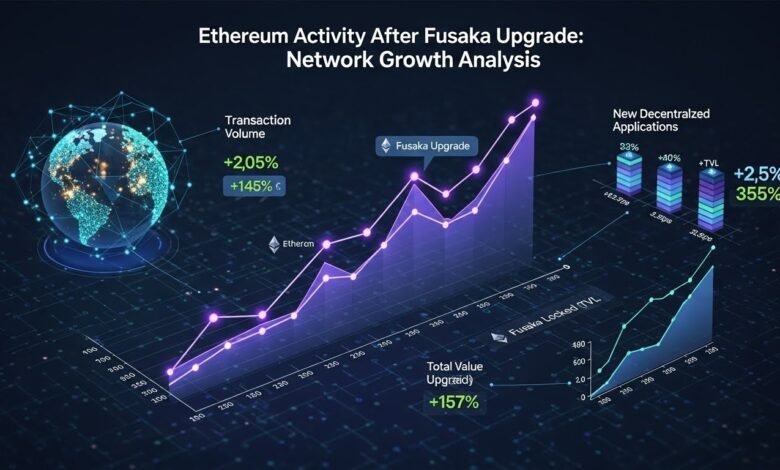
The blockchain landscape experienced a transformative moment when Ethereum implemented its highly anticipated Fusaka upgrade, marking a pivotal evolution in the network’s infrastructure. The Ethereum activity after Fusaka upgrade has demonstrated remarkable expansion across multiple performance indicators, signaling a new era of efficiency and scalability for the world’s leading smart contract platform. This comprehensive analysis examines the substantial growth patterns, technical improvements, and ecosystem-wide implications that have emerged following this critical network enhancement, providing insights into how this upgrade has reshaped user engagement, transaction dynamics, and overall network health.
Fusaka Upgrade’s Technical Foundation
The Fusaka network upgrade represents a sophisticated combination of protocol improvements designed to address long-standing challenges within the Ethereum ecosystem. This enhancement introduced critical modifications to the network’s execution layer, optimizing how transactions are processed and validated across thousands of nodes worldwide. The technical architecture behind this upgrade focused on reducing computational overhead while simultaneously increasing throughput capacity, creating a more efficient environment for decentralized applications and smart contract execution.
Engineers and developers within the Ethereum community spent countless hours refining the specifications that would eventually comprise the Fusaka implementation. The upgrade incorporated advanced cryptographic techniques and consensus mechanism refinements that fundamentally altered how the network handles transaction ordering and block production. These technical enhancements laid the groundwork for the significant performance improvements that users and developers would experience in the weeks and months following activation.
The activation process itself was executed with meticulous precision, requiring coordination across validator nodes, infrastructure providers, and application developers throughout the global Ethereum ecosystem. This careful orchestration ensured minimal disruption to ongoing operations while simultaneously introducing transformative capabilities that would enable unprecedented levels of network activity and user engagement.
Quantifying the Surge in Network Transaction Volume
Following the implementation of the upgrade, Ethereum transaction volume experienced dramatic increases that exceeded even optimistic projections from network analysts. Data compiled from blockchain explorers revealed that daily transaction counts climbed substantially within the first month post-activation, with some measurement periods showing increases exceeding forty percent compared to pre-upgrade baselines. This surge in activity demonstrated renewed confidence among users and developers in the network’s ability to handle increased demand without compromising performance or security.
The transaction growth patterns displayed interesting temporal characteristics, with peak activity periods showing even more pronounced increases compared to average daily metrics. Network utilization during high-demand windows improved significantly, as the Ethereum scalability improvements enabled the protocol to process more operations without experiencing the congestion and fee spikes that had previously characterized busy periods. This enhanced capacity attracted new users who had previously been deterred by unpredictable transaction costs and processing delays.
Analysis of transaction types revealed that the growth was distributed across various categories of network activity, including token transfers, decentralized exchange interactions, non-fungible token operations, and complex smart contract executions. This diversified expansion indicated that the upgrade’s benefits extended throughout the entire Ethereum ecosystem rather than being concentrated in specific application categories or user segments.
Decentralized Application Ecosystem Expansion
The decentralized application growth following the Fusaka upgrade represented one of the most visible indicators of the network’s enhanced capabilities. Developers who had postponed launching new projects due to concerns about network performance and user experience found the post-upgrade environment significantly more conducive to deploying sophisticated applications. The number of newly deployed smart contracts increased substantially, with blockchain analytics platforms recording noteworthy upticks in developer activity across multiple programming frameworks and development environments.
Established decentralized applications also benefited from the improved network conditions, with many protocols experiencing increased user engagement and transaction throughput. Decentralized finance platforms reported higher trading volumes and liquidity provision activity, while non-fungible token marketplaces saw renewed interest from collectors and creators. These ecosystem-wide improvements created positive feedback loops, where enhanced performance attracted more users, which in turn justified additional developer investment in building and improving applications.
The quality of user experiences within Ethereum activity after Fusaka upgrade environments improved markedly, as reduced latency and more predictable transaction confirmation times made interacting with decentralized applications more comparable to traditional web experiences. This narrowing of the user experience gap between decentralized and centralized platforms represented a crucial milestone in blockchain technology’s journey toward mainstream adoption.
Network Performance Metrics and Optimization Results
Comprehensive blockchain performance metrics collected following the upgrade revealed substantial improvements across virtually every meaningful measure of network health and efficiency. Average block times stabilized within tighter ranges, reducing variance and making transaction confirmation timing more predictable for users and applications. Gas consumption patterns showed optimization, with certain transaction types requiring fewer computational resources to execute, effectively reducing costs for end users even during periods of elevated network activity.
The network optimization achievements extended beyond simple throughput improvements to encompass more sophisticated measures of protocol efficiency. Memory pool management became more effective, reducing the likelihood of transaction drops and improving the overall reliability of transaction propagation across the peer-to-peer network. Validator performance metrics indicated improved block proposal success rates and reduced instances of missed attestations, suggesting that the infrastructure layer supporting the network was operating more smoothly.
Network security indicators remained robust throughout the transition period and subsequent growth phase, demonstrating that the performance enhancements did not come at the expense of the security guarantees that have long been fundamental to Ethereum’s value proposition. The successful navigation of this growth period without security incidents or consensus failures reinforced confidence in the upgrade’s technical soundness and the broader Ethereum development community’s engineering capabilities.
Economic Implications and Fee Structure Evolution
The economic dynamics surrounding Ethereum activity after Fusaka upgrade manifested in complex ways that affected various network participants differently. Transaction fee patterns evolved in response to the increased capacity, with average fees declining during normal network conditions while peak fees during high-demand periods remained more moderate than historical comparisons would have predicted. This fee structure evolution made the network more accessible to users executing smaller-value transactions while maintaining economic incentives for validators and infrastructure providers.
The relationship between network utilization and fee levels became more linear and predictable, reducing the wild fee volatility that had previously characterized periods of network congestion. This predictability enabled better user experience design within applications, as developers could more accurately estimate transaction costs and communicate these to users before they initiated operations. The reduced uncertainty around transaction costs removed a significant friction point that had hindered adoption among price-sensitive user segments.
Staking rewards and validator economics also adjusted in response to the changing network conditions, with increased transaction activity generating higher fee revenue that supplemented base issuance rewards. This economic strengthening of the validator ecosystem contributed to network security by making participation more attractive to institutional operators and sophisticated individual validators, further decentralizing the infrastructure supporting the protocol.
Developer Ecosystem Response and Innovation Acceleration
The developer community’s response to the Ethereum scalability improvements demonstrated the pent-up demand for enhanced network capabilities that had existed before the upgrade. Open-source repositories associated with Ethereum development showed increased commit activity and new project initializations, indicating heightened developer engagement across the ecosystem. Development frameworks and tooling providers released updates optimized for the post-upgrade environment, enabling developers to leverage new capabilities more effectively.
Innovation in layer-two scaling solutions accelerated rather than slowed following the base layer upgrade, as developers recognized that improvements at different protocol layers could compound to create even more substantial user benefits. Rollup implementations and other scaling technologies incorporated optimizations that specifically leveraged the enhanced base layer capabilities, creating synergies that further amplified the practical benefits users experienced when interacting with the ecosystem.
Educational content and developer resources focusing on post-upgrade best practices proliferated throughout community channels, helping ensure that the broader developer population could effectively utilize the network’s enhanced capabilities. This knowledge dissemination accelerated the ecosystem’s collective learning and optimization, creating a positive cycle where shared understanding led to better implementations, which in turn generated additional insights to be shared throughout the community.
Institutional Adoption and Enterprise Integration Patterns
The Ethereum ecosystem expansion following the upgrade attracted renewed attention from institutional participants and enterprise organizations evaluating blockchain integration opportunities. The improved performance characteristics and enhanced predictability made the network more suitable for business applications with strict service level requirements and cost structure expectations. Several notable enterprises announced expanded Ethereum integration initiatives in the months following the upgrade, citing the improved technical foundation as a key factor in their decision-making.
Financial institutions exploring blockchain settlement mechanisms and tokenization platforms showed particular interest in the upgraded network, as the enhanced throughput and reduced latency aligned more closely with traditional financial infrastructure performance expectations. This institutional validation created positive signaling effects throughout the ecosystem, attracting additional capital, talent, and attention to Ethereum-based projects and initiatives.
Regulatory clarity in several jurisdictions combined with the technical improvements to create a more favorable environment for institutional participation. Organizations that had been waiting for both regulatory guidance and technical maturity found the post-upgrade landscape more conducive to moving forward with blockchain integration projects, contributing to the overall growth in network activity and ecosystem development.
Comparative Analysis with Previous Network Upgrades
Examining Ethereum activity after Fusaka upgrade in the context of previous protocol enhancements reveals interesting patterns about how the network and its ecosystem respond to technical improvements. The magnitude of activity increase following Fusaka exceeded the responses to several earlier upgrades, suggesting that this particular enhancement addressed especially significant constraints or that the cumulative effect of multiple improvements reached a critical threshold that unlocked new usage patterns.
The sustainability of the post-upgrade growth trajectory appeared more robust compared to some historical upgrade cycles, where initial enthusiasm sometimes gave way to regression toward previous activity levels. The persistent elevation in network utilization months after activation indicated that the improvements delivered lasting value rather than generating temporary speculative interest that subsequently dissipated.
Community sentiment analysis revealed more broadly distributed optimism compared to previous upgrade cycles, suggesting that the benefits of the Fusaka implementation were recognized across diverse stakeholder groups rather than being primarily appreciated by specific technical or financial subsets of the ecosystem. This broad-based positive reception contributed to the sustained momentum in network growth and ecosystem development.
Geographic Distribution of Network Activity Growth
The geographic patterns of increased Ethereum activity after Fusaka upgrade revealed interesting insights about global adoption trends and regional infrastructure development. Analytics platforms tracking node distribution and transaction origination patterns indicated that growth in network participation was distributed across multiple continents, rather than being concentrated in traditional blockchain adoption centers. This geographic diversification suggested increasing global relevance for Ethereum-based applications and financial services.
Emerging markets showed particularly strong growth rates in certain use cases, especially those related to cross-border value transfer and access to decentralized financial services. The improved network performance lowered barriers to participation in regions where users were especially sensitive to transaction costs and processing delays, enabling new cohorts of users to meaningfully engage with the ecosystem for the first time.
Infrastructure development in previously underserved geographic regions accelerated as the enhanced network characteristics made operating nodes and validators more economically viable in areas with varying connectivity conditions and energy costs. This infrastructure expansion further reinforced the global nature of the network and reduced dependencies on concentrated geographic clusters that had historically dominated certain aspects of the ecosystem.
Environmental Considerations and Energy Efficiency Progress
The network optimization achievements following the Fusaka upgrade included noteworthy improvements in energy efficiency metrics, building upon the substantial gains already realized through Ethereum’s earlier transition to proof-of-stake consensus. The enhanced processing efficiency meant that the network could handle significantly more transaction volume without proportional increases in energy consumption, improving the environmental sustainability profile of the protocol.
Environmental advocacy organizations and sustainability-focused investors noted these improvements, with several prominent voices acknowledging the progress Ethereum had made in addressing environmental concerns that had previously attracted criticism. This recognition helped counter lingering misconceptions about blockchain energy consumption and positioned Ethereum favorably in discussions about sustainable technology infrastructure.
The energy efficiency gains also had practical economic implications for validators and infrastructure operators, as improved computational efficiency translated to reduced operating costs. These savings contributed to the economic viability of validation participation across a broader range of geographic locations and organizational scales, supporting the decentralization objectives that remain central to Ethereum’s philosophical foundation.
Future Trajectory and Ongoing Development Roadmap
Looking beyond the immediate Ethereum activity after Fusaka upgrade growth patterns, the network’s development roadmap includes additional enhancements designed to further expand capabilities and address remaining limitations. Development teams working on future protocol improvements have incorporated lessons learned from the Fusaka deployment, refining planning and activation processes to maximize the likelihood of successful implementations.
The ecosystem’s response to the Fusaka upgrade has influenced prioritization decisions for subsequent development efforts, with certain improvement proposals gaining additional support based on how well they complement the capabilities introduced in this latest enhancement. This evidence-based approach to roadmap development helps ensure that development resources are allocated to initiatives most likely to deliver meaningful user benefits and ecosystem growth.
Ongoing research into advanced cryptographic techniques, consensus mechanism refinements, and execution environment optimizations continues to generate promising candidates for future protocol upgrades. The successful track record of implementing complex technical improvements without compromising network security or stability provides confidence that Ethereum can continue evolving to meet emerging requirements and expanding use cases.
Conclusion
The substantial increase in Ethereum activity after the Fusaka upgrade represents more than a temporary spike in usage metrics. It signals a fundamental expansion in the network’s capacity to serve as infrastructure for a diverse ecosystem of decentralized applications, financial services, and digital asset platforms. The technical improvements delivered through this upgrade have created conditions for sustained growth, attracting new users, developers, and institutional participants who previously found the network’s characteristics misaligned with their requirements.
As the Ethereum ecosystem continues maturing and subsequent protocol enhancements build upon the foundation established by Fusaka, the long-term potential for network growth and real-world impact remains substantial. Organizations and developers evaluating blockchain integration opportunities should carefully examine the Ethereum scalability improvements and consider how the enhanced network environment might enable new applications and use cases previously considered impractical.
For those looking to participate in the evolving Ethereum ecosystem, whether as users, developers, validators, or institutional adopters, the post-Fusaka environment offers compelling opportunities to engage with blockchain technology at a maturity level that balances innovation with reliability. Monitor ongoing developments in Ethereum activity after the Fusaka upgrade, metric,s and consider how this leading blockchain platform might serve your specific needs in the decentralized digital economy.
See more;Tom Lee Bitcoin Ethereum Predictions Hit $250K – Bullish Crypto Forecast