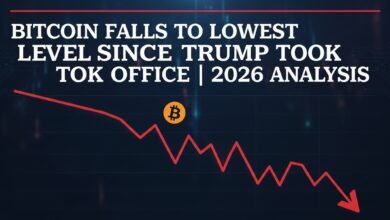


Bitcoin’s surge and Trump shocks continue to dominate headlines. Just when investors thought digital assets were establishing stability and momentum, former President Donald Trump’s policy announcements and unpredictable statements have once again injected substantial uncertainty into the market. This pattern of Bitcoin surge followed by sudden reversals tied to Trump shocks has become a recurring theme that cryptocurrency traders and institutional investors can no longer ignore. Understanding the intricate relationship between political developments and cryptocurrency volatility has never been more critical for anyone holding or considering investments in digital assets.
The recent trajectory of Bitcoin price movements demonstrates a clear correlation between Trump’s public statements, policy proposals, and market reactions. Within the first few weeks of January 2026, Bitcoin experienced significant fluctuations that left many investors reassessing their positions and risk management strategies in light of ongoing political uncertainty.
Bitcoin Surge Phenomenon
The concept of a Bitcoin surge typically refers to periods of rapid price appreciation driven by a combination of factors, including institutional adoption, technological developments, macroeconomic conditions, and regulatory clarity. Throughout late 2025 and early 2026, Bitcoin had been building substantial momentum as several favorable conditions aligned simultaneously.
Major institutional investors had increased their allocations to digital asset portfolios, viewing Bitcoin as a hedge against traditional market volatility and inflation concerns. The cryptocurrency had broken through several key resistance levels, attracting technical traders and momentum investors who saw the price action as confirmation of a sustained bull market. Mining operations had become more efficient and environmentally sustainable, addressing one of the primary criticisms that had previously hampered mainstream adoption.
Furthermore, several nations had moved toward establishing clearer regulatory frameworks for cryptocurrency operations, reducing the compliance uncertainties that had deterred many traditional financial institutions from entering the space. This regulatory progress created an environment where Bitcoin trading strategies could be developed with greater confidence about the legal landscape.
The surge was also fueled by technological advancements in the Bitcoin network itself, including improvements to transaction speeds and scalability solutions that made the cryptocurrency more practical for everyday transactions beyond mere speculation. Layer-two solutions and lightning network adoption had reached new milestones, demonstrating that Bitcoin could evolve beyond its original limitations.
How Trump Shocks Impact Cryptocurrency Markets
The term Trump shocks has become shorthand for the sudden and often unexpected policy announcements, regulatory threats, or public statements from Donald Trump that create immediate ripple effects across financial markets. Since returning to the presidency in January 2025, Trump has demonstrated a willingness to deploy unconventional approaches to economic policy that frequently catch markets off guard.
Cryptocurrency market uncertainty intensifies dramatically when Trump makes pronouncements about digital assets, financial regulation, or economic policy that could indirectly affect the crypto ecosystem. His administration’s unpredictable stance on various issues creates an environment where investors struggle to price in political risk effectively.
Several specific mechanisms explain how Trump policies Bitcoin interactions manifest in market movements. First, regulatory uncertainty increases when Trump signals potential crackdowns on cryptocurrency exchanges or suggests new oversight mechanisms. Even hints of increased scrutiny can trigger automated trading algorithms and cause significant sell-offs within minutes.
Second, Trump’s broader economic policies regarding taxation, international trade, and fiscal spending directly influence the macroeconomic environment in which Bitcoin operates. When Trump announces tariffs or trade restrictions, these decisions affect global capital flows and can redirect investment away from riskier assets like cryptocurrencies toward perceived safe havens.
Third, Trump’s relationship with traditional financial institutions and his appointments to key regulatory positions create ongoing speculation about the future regulatory landscape. When he nominates officials known for skepticism toward cryptocurrencies or signals support for stricter banking oversight, market participants anticipate tighter conditions for digital asset regulation.
The psychological impact of Trump shocks extends beyond immediate policy implications. Markets have learned to expect the unexpected from his administration, creating a persistent premium for uncertainty that keeps volatility elevated even during periods when no specific announcements are imminent.
The Pattern of Bitcoin Price Movements Under Political Pressure
Examining historical Bitcoin price movements during periods of heightened political uncertainty reveals consistent patterns that sophisticated traders have learned to recognize and potentially exploit. The cryptocurrency tends to experience sharp initial reactions to political announcements, followed by periods of consolidation as the market digests the actual implications versus the perceived threats.
When Trump first took office in 2025, Bitcoin experienced a brief rally based on expectations that his pro-business stance might extend to a light-touch approach to cryptocurrency regulation. However, these hopes were quickly dashed when his administration signaled that digital assets would face the same scrutiny as traditional financial instruments, triggering the first major correction of his term.
Throughout 2025, a pattern emerged where positive momentum in Bitcoin markets would build over weeks or months, only to be disrupted by sudden policy announcements or inflammatory statements from Trump or his appointees. This created a sawtooth pattern in price charts that frustrated long-term holders while creating opportunities for nimble traders who could anticipate these cycles.
The correlation between Trump’s Twitter activity and Bitcoin volatility became so pronounced that some quantitative trading firms developed algorithms specifically designed to parse his social media statements and execute trades based on sentiment analysis. This automated response system further amplified the impact of individual statements, creating feedback loops that exaggerated price swings.
Cryptocurrency investment risks have fundamentally changed under this new paradigm where political developments can overwhelm traditional supply and demand dynamics. Investors who previously focused primarily on technical analysis and on-chain metrics now must incorporate political risk assessment into their decision-making frameworks.
Analyzing Recent Trump Policy Announcements and Market Reactions
The most recent episode of Bitcoin surge Trump shocks began in early January 2026 when Bitcoin reached a new local high after several weeks of steady accumulation. The rally was supported by strong fundamentals including increased institutional adoption and positive regulatory developments in Europe and Asia.
However, on January 15th, Trump unexpectedly announced a comprehensive review of all cryptocurrency regulations, suggesting that his administration would implement stricter controls on digital asset exchanges and potentially require cryptocurrency holders to register their wallets with federal authorities. The announcement came without warning during a press conference focused on entirely different topics, catching markets completely off guard.
Within hours, Bitcoin dropped more than twelve percent as panic selling swept through retail and institutional portfolios alike. The selling pressure was amplified by leveraged positions being liquidated as prices fell through key support levels, creating a cascade effect that deepened the correction beyond what fundamental analysis would have predicted.
What made this particular Trump shock especially damaging was its timing, coming just as Bitcoin had broken through psychological resistance at a round-number price point that many traders viewed as confirmation of a sustained uptrend. The reversal not only eliminated weeks of gains but also damaged market confidence in the stability of any rally under current political conditions.
The subsequent days revealed that Trump’s announcement lacked specific implementation details and may have been more rhetorical than substantive. However, the damage to market sentiment had already occurred, demonstrating how political impact on Bitcoin can persist long after the initial catalyst has been clarified or even walked back.
Institutional Response to Cryptocurrency Volatility
Major institutional investors have been forced to recalibrate their approaches to cryptocurrency volatility in light of the persistent Trump shocks phenomenon. Traditional risk management frameworks that worked well for equities and bonds have proven inadequate for navigating the unique challenges posed by politically-driven cryptocurrency market disruptions.
Some institutions have responded by reducing their overall cryptocurrency allocations, deciding that the risk-adjusted returns no longer justify the exposure given the elevated political uncertainty. These institutions argue that fundamental analysis becomes nearly impossible when political interventions can override market forces at any moment without warning.
Other institutions have taken the opposite approach, viewing the increased volatility as an opportunity to implement more sophisticated trading strategies. Hedge funds specializing in cryptocurrency have developed frameworks that attempt to predict and profit from Trump shocks by analyzing patterns in his communication style, policy priorities, and relationships with key advisors.
Several major asset managers have begun offering products that provide cryptocurrency exposure while incorporating political risk hedging mechanisms. These structured products use options and futures contracts to limit downside exposure during volatile periods while maintaining upside participation during stable conditions.
The institutional debate reflects a broader question about whether Bitcoin trading strategies can be successfully implemented in an environment where non-market forces play such a dominant role. Some argue that Bitcoin’s value proposition as a decentralized, non-governmental store of value is fundamentally undermined when its price movements are so heavily influenced by the actions of a single political figure.
Global Market Dynamics and International Regulatory Responses
The impact of Bitcoin surge Trump shocks extends far beyond American markets, creating ripple effects throughout the global cryptocurrency ecosystem. International exchanges have experienced correlated selling pressure during Trump-induced volatility events, demonstrating how interconnected digital asset markets have become regardless of geographic boundaries.
Regulatory authorities in other jurisdictions have watched the American market turmoil with interest, drawing different conclusions about appropriate policy responses. European regulators have accelerated efforts to implement their Markets in Crypto-Assets regulation, viewing clear and stable rules as a competitive advantage that might attract cryptocurrency businesses seeking to escape American uncertainty.
Asian markets have shown somewhat greater resilience to Trump shocks, partly because trading during American hours represents only a portion of the twenty-four-hour cryptocurrency market cycle. However, major Asian exchanges still experience significant volatility transmission, especially when Trump announcements occur during overlapping trading hours.
Some countries have explicitly positioned themselves as cryptocurrency-friendly jurisdictions, hoping to attract businesses and investment fleeing the uncertain American regulatory environment. These nations argue that overly restrictive or unpredictable policies will simply push innovation and capital to more welcoming markets rather than eliminating cryptocurrency activity.
The international dimension of digital asset regulation creates additional complexity for Trump administration policies. Strict American rules that are not coordinated with other major markets may prove ineffective at controlling cryptocurrency activity while simultaneously disadvantaging American businesses and investors who face restrictions their international competitors do not.
Technical Analysis Versus Fundamental Analysis in Volatile Markets
The recurring pattern of Bitcoin surge Trump shocks has sparked intense debate among cryptocurrency analysts about the relative value of technical analysis versus fundamental analysis for predicting price movements. Traditional technical analysts argue that chart patterns and indicators can identify potential support and resistance levels regardless of the underlying causes of price movements.
However, critics point out that Trump shocks often trigger price movements that violate established technical patterns, rendering traditional indicators unreliable. When political announcements can cause ten percent swings in minutes, the carefully constructed support levels identified through historical price analysis become almost meaningless.
Fundamental analysts face different challenges in this environment. While they can assess factors like network adoption, mining difficulty, and on-chain transaction volumes to gauge Bitcoin’s underlying health, these fundamentals provide little insight into when the next political disruption might occur or how severe its impact might be.
Some analysts have attempted to develop hybrid frameworks that incorporate political risk assessment alongside traditional technical and fundamental factors. These approaches might track Trump’s public appearances, monitor legislative calendars for relevant hearings, and analyze the political positioning of key regulatory appointees to anticipate potential catalysts for market disruption.
The cryptocurrency volatility created by political factors has also renewed interest in alternative data sources. Some traders now monitor social media sentiment, news flow algorithms, and even betting markets focused on political outcomes as leading indicators that might provide early warning of impending Trump shocks.
Risk Management Strategies for Cryptocurrency Investors
Developing effective cryptocurrency investment risks mitigation strategies has become essential for anyone maintaining significant Bitcoin positions during this period of elevated political uncertainty. Traditional approaches like stop-loss orders have proven problematic because rapid price movements can trigger exits at unfavorable prices, locking in losses that might have been temporary.
Position sizing represents one of the most fundamental risk management tools available to cryptocurrency investors facing Trump shock volatility. Rather than concentrating portfolios heavily in Bitcoin, diversified approaches that include various cryptocurrencies, traditional assets, and cash reserves provide buffers against single-asset disruptions.
Time horizon considerations have taken on new importance as well. Investors committed to holding Bitcoin for multiple years may choose to ignore short-term political volatility, viewing temporary price declines as opportunities to accumulate additional positions at favorable prices. However, this approach requires substantial conviction and financial resilience to withstand potentially prolonged drawdowns.
Options strategies have become increasingly popular among sophisticated cryptocurrency investors seeking to protect against downside risk while maintaining upside exposure. Buying put options provides insurance against severe price declines, though the cost of this protection can be substantial during periods of elevated volatility when option premiums are high.
Some investors have adopted tactical approaches that adjust exposure based on the political calendar and perceived likelihood of disruptive announcements. These strategies might reduce cryptocurrency positions ahead of major policy speeches or congressional hearings while increasing allocations during quieter periods when political impact on Bitcoin is likely to be minimal.
The Role of Automated Trading and Algorithmic Responses
Automated trading systems have amplified both the Bitcoin surge dynamics and the severity of corrections following Trump shocks. High-frequency trading algorithms execute thousands of transactions per second based on price movements, news sentiment, and technical indicators, creating feedback loops that accelerate both rallies and sell-offs.
When positive momentum builds in Bitcoin markets, algorithmic systems detect the uptrend and begin accumulating positions, contributing additional buying pressure that reinforces the rally. This creates self-fulfilling prophecies where price increases attract more algorithmic buying, pushing prices higher still.
However, the same mechanisms work in reverse when Trump shocks trigger initial selling pressure. Algorithms detect the breakdown of support levels and begin executing sell orders, contributing to cascading liquidations that drive prices lower much faster than would occur in markets dominated by human decision-making alone.
Some market observers argue that the prevalence of automated trading has fundamentally altered the character of Bitcoin price movements, making them more prone to extreme volatility and flash crashes while reducing the time available for human traders to assess situations and make reasoned decisions.
Regulatory discussions have begun focusing on whether algorithmic trading in cryptocurrency markets requires oversight similar to that applied in traditional securities markets. Proposals include circuit breakers that temporarily halt trading during extreme volatility and requirements for algorithmic traders to register with authorities and maintain risk controls.
Long-Term Implications for Bitcoin Adoption and Legitimacy
The recurring pattern of Bitcoin surge Trump shocks raises fundamental questions about cryptocurrency’s path toward mainstream adoption and legitimacy as an asset class. Advocates argue that Bitcoin’s value proposition as a decentralized alternative to government-controlled currencies remains intact regardless of short-term political volatility.
However, skeptics contend that an asset whose price can swing dramatically based on statements from political figures cannot fulfill the core functions of money, namely serving as a stable store of value, medium of exchange, and unit of account. The volatility makes Bitcoin impractical for everyday transactions and business operations that require predictable purchasing power.
Institutional adoption has proceeded despite political uncertainty, with several major corporations and investment funds maintaining or increasing their Bitcoin allocations throughout periods of Trump shock volatility. These institutions argue that Bitcoin’s long-term potential justifies accepting short-term price fluctuations as the market matures and political uncertainty eventually resolves.
The development of cryptocurrency derivatives markets has provided tools for managing political risk that were previously unavailable. Futures contracts, options, and other derivatives allow investors to hedge their Bitcoin positions or implement sophisticated strategies that profit from volatility itself rather than directional price movements.
Educational efforts within the cryptocurrency community have emphasized the importance of understanding digital asset regulation and political risk as fundamental components of investment analysis rather than peripheral concerns. This represents a maturation of the market from its early days, when regulatory considerations were often ignored or dismissed.
Comparing Current Conditions to Previous Market Cycles
Historical perspective reveals that cryptocurrency market uncertainty driven by political factors is not entirely new, though the current intensity and frequency of disruptions under Trump’s administration represent an escalation from previous cycles. Earlier regulatory actions by agencies like the Securities and Exchange Commission and Commodity Futures Trading Commission created similar volatility events, though typically with more warning and deliberation.
The 2017-2018 Bitcoin bubble and subsequent crash occurred against a backdrop of regulatory uncertainty, though that uncertainty was characterized more by ambiguity about whether and how existing laws applied to cryptocurrencies rather than by active political intervention. The current environment features more direct political involvement in cryptocurrency policy discussions.
Previous administrations generally approached cryptocurrency regulation through established bureaucratic processes that, while slow and sometimes frustrating for market participants, provided a degree of predictability about timing and process. Trump’s more personalized and improvisational approach to policy-making has eliminated much of that predictability.
Some analysts draw parallels between current Bitcoin price movements and the gold market’s behavior during previous periods of political uncertainty and currency instability. Gold has historically experienced significant volatility around major political events, though its much larger market capitalization and deeper liquidity pools tend to dampen the percentage swings compared to Bitcoin.
The comparison suggests that political sensitivity may be an inherent characteristic of alternative assets positioned as hedges against government monetary policy rather than a unique feature of the current moment. If this interpretation is correct, investors should expect political impact on Bitcoin to remain significant indefinitely rather than diminishing as the market matures.
Expert Perspectives and Market Analyst Predictions
Leading cryptocurrency analysts have offered divergent perspectives on the sustainability of Bitcoin surge trends in the face of ongoing Trump shocks. Optimists argue that each successive political disruption has less impact than previous ones as the market develops greater resilience and participants become accustomed to volatility.
This camp points to metrics like Bitcoin’s recovery time following corrections, which has shortened in recent cycles compared to earlier periods. They interpret this as evidence of strong underlying demand that views political volatility as temporary noise rather than fundamental impairment of Bitcoin’s value proposition.
Pessimists counter that the accumulation of political risk is unsustainable and that eventually a triggering event will cause institutional investors to abandon cryptocurrency markets en masse, creating a liquidity crisis that could take years to resolve. They warn that current prices reflect excessive optimism about political uncertainty resolving favorably for the cryptocurrency industry.
A middle perspective acknowledges the genuine challenges posed by political volatility while maintaining that Bitcoin’s global, decentralized nature ultimately protects it from being completely controlled by any single government’s policies. Proponents of this view suggest that overly restrictive American policies would accelerate the shift of cryptocurrency activity to other jurisdictions without killing the asset class globally.
Several prominent traditional finance figures who were previously cryptocurrency skeptics have softened their positions, acknowledging that digital assets have demonstrated enough resilience and institutional acceptance to warrant serious consideration as portfolio components despite ongoing political challenges.
Strategies for Navigating Political Uncertainty in Crypto Markets
Investors seeking to maintain cryptocurrency exposure while managing Trump shock risks have several strategic options available, each with distinct advantages and limitations. Dollar-cost averaging represents one approach that reduces exposure to any single entry point by spreading purchases across regular intervals regardless of price.
This strategy acknowledges that predicting political developments and their market impacts is essentially impossible, instead focusing on accumulating positions over time that will benefit from long-term appreciation regardless of short-term volatility. However, dollar-cost averaging requires discipline to maintain regular purchases even during periods of severe market stress.
Tactical allocation adjustments based on political risk assessment offer an alternative for investors willing to make active decisions about when to increase or reduce cryptocurrency exposure. This approach requires developing frameworks for evaluating political risk levels and maintaining the emotional discipline to act on those assessments even when it means selling during rallies or buying during panics.
Portfolio diversification across multiple cryptocurrencies can reduce single-asset risk, though political developments often affect the entire cryptocurrency market simultaneously, limiting the benefits of diversification within the asset class. True diversification requires holding non-cryptocurrency assets that have low correlation with Bitcoin price movements.
Some sophisticated investors have implemented rules-based systems that automatically adjust their cryptocurrency allocation based on volatility measurements and other quantifiable risk metrics. These mechanical approaches remove emotional decision-making from the process while ensuring that position sizes reflect current market conditions.
The Future of Bitcoin Under Continued Political Pressure
Speculation about Bitcoin’s trajectory under sustained political pressure from the Trump administration centers on several possible scenarios with dramatically different implications for investors. One optimistic scenario envisions regulatory clarity eventually emerging as the administration moves beyond initial uncertainty to establish consistent, workable rules that allow the cryptocurrency industry to operate with confidence.
Under this scenario, the current Bitcoin surge Trump shocks pattern would gradually diminish as market participants gain understanding of the regulatory framework and can more accurately price political risk. Bitcoin would transition from a speculative asset subject to political whims toward a more stable alternative investment class with predictable treatment under law.
A pessimistic scenario imagines escalating regulatory restrictions that severely limit cryptocurrency’s utility and adoption potential within the United States, potentially including outright bans on certain activities or confiscatory taxation that makes holding Bitcoin impractical. This outcome would likely trigger a major repricing of Bitcoin downward as the American market, despite representing only one country, exerts disproportionate influence on global cryptocurrency markets.
An intermediate scenario acknowledges that political uncertainty may persist indefinitely without reaching either extreme, as the Trump administration maintains an ambiguous or evolving stance on cryptocurrency policy. Under this scenario, cryptocurrency volatility would remain elevated but investors would gradually develop better tools and strategies for managing political risk, allowing the market to function despite ongoing uncertainty.
The scenario that ultimately unfolds will depend on numerous factors beyond Trump’s personal preferences, including congressional action, judicial interpretations of existing law, international regulatory coordination, and the cryptocurrency industry’s own evolution in response to political pressures.
Conclusion: Navigating Bitcoin’s Political Minefield
The phenomenon of Bitcoin surge Trump shocks has fundamentally altered the landscape for cryptocurrency investors, introducing a level of political risk that was not adequately priced into earlier market valuations. Understanding the complex relationship between political developments and cryptocurrency market uncertainty has become essential for anyone seeking to participate in digital asset markets during this tumultuous period.
While the pattern of momentum building followed by political disruption has created significant challenges for investors, it has also spurred important innovations in risk management, regulatory engagement, and market infrastructure that may ultimately strengthen the cryptocurrency ecosystem. The market’s ability to absorb these shocks and continue functioning demonstrates a degree of resilience that should not be underestimated.
Investors must recognize that Bitcoin price movements will likely remain heavily influenced by political factors for the foreseeable future, requiring vigilance, flexibility, and robust risk management frameworks. Those who can successfully navigate these challenges while maintaining conviction in Bitcoin’s long-term value proposition may find that periods of political turmoil create attractive entry points rather than reasons to abandon the asset class entirely.
As we move further into 2026, monitoring Trump policies Bitcoin interactions will remain critical for anyone holding or considering cryptocurrency investments. The next few months will likely provide greater clarity about whether the administration intends to establish a workable regulatory framework or pursue more restrictive policies that could fundamentally change Bitcoin’s role in global financial markets.
See more;Bitcoin Surges Past $110K in May 2025 Amid Institutional Growth