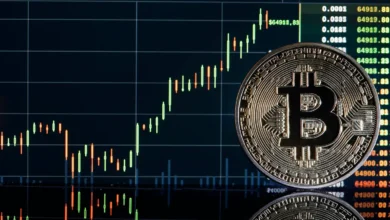

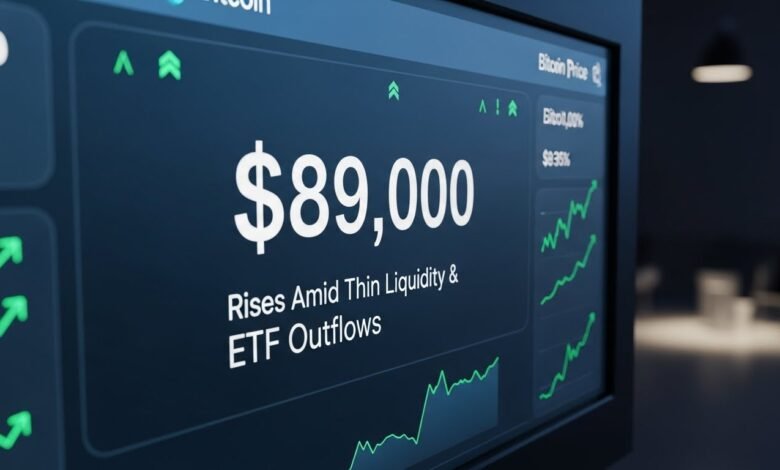
The Bitcoin price today has defied market expectations by climbing to the $89,000 threshold, a remarkable achievement considering the challenging market conditions characterized by thin liquidity and substantial exchange-traded fund outflows. This price movement has caught the attention of cryptocurrency analysts and institutional investors alike, as the leading digital asset demonstrates resilience in an environment that would typically suppress upward momentum. The Bitcoin price today reflects a complex interplay of market forces, with reduced trading volumes coinciding with persistent buying pressure that continues to push valuations higher despite headwinds from institutional product withdrawals.
Understanding the current BTC price analysis requires examining multiple factors simultaneously. The cryptocurrency market has entered a unique phase where traditional indicators of bearish sentiment, such as ETF outflows and diminished liquidity, are not producing the expected downward price pressure. This phenomenon suggests that underlying demand remains robust, with holders demonstrating conviction even as some institutional participants reduce their exposure through regulated investment vehicles.
Today’s Bitcoin Price Movement
The trajectory of the Bitcoin price today represents more than just a numerical increase—it embodies a significant shift in market dynamics that warrants careful examination. When Bitcoin approaches the $89,000 level, it enters territory that historically has acted as both psychological resistance and a proving ground for sustained bullish momentum. The current price action occurs against a backdrop of reduced Bitcoin market liquidity, meaning fewer active buyers and sellers are participating in exchanges at any given moment.
Thin liquidity conditions typically amplify price volatility in both directions. When selling pressure encounters limited buy-side liquidity, prices can fall precipitously. Conversely, when buying demand meets shallow order books, even modest purchase volumes can drive substantial price increases. The Bitcoin price today appears to be benefiting from this latter scenario, where concentrated buying interest is finding insufficient resistance from sellers, thereby enabling the climb toward $89,000.
Market microstructure analysis reveals that Bitcoin trading volume has declined across major exchanges during this price advance, confirming the thin liquidity narrative. Lower volumes during upward price movements can indicate either lack of conviction or, alternatively, strong holder sentiment where existing investors refuse to sell despite attractive price levels. Current data suggests the latter interpretation may be more accurate, as on-chain metrics show minimal movement of Bitcoin from long-term holder wallets to exchanges.
The Thin Liquidity Challenge in Cryptocurrency Markets
Bitcoin market liquidity serves as a critical indicator of market health and efficiency. Liquidity refers to the ease with which assets can be bought or sold without causing significant price changes. In highly liquid markets, large transactions execute with minimal price impact. Conversely, in thin markets, modest trades can trigger disproportionate price swings. The current environment demonstrates characteristics of reduced liquidity across multiple dimensions.
Exchange order book depth has contracted significantly in recent weeks, with fewer standing orders waiting at various price levels. This thinning of order books means that market orders encounter less immediate liquidity, potentially causing slippage and increased volatility. For the Bitcoin price today to rise under these conditions suggests that buy-side demand, though perhaps not voluminous, faces even less selling pressure.
Several factors contribute to the current liquidity constraints. Year-end portfolio adjustments often see reduced market participation as institutional traders close positions and individual investors reassess allocations. Additionally, uncertainty surrounding regulatory developments and macroeconomic conditions may have prompted some market makers to withdraw liquidity provision, reducing overall market depth. The holiday season traditionally experiences lower trading activity across financial markets, and cryptocurrency ETF flows are no exception to this seasonal pattern.
The implications of thin liquidity extend beyond immediate price action. Reduced liquidity increases the cost of execution for larger traders, potentially deterring institutional participation. It also elevates the risk of flash crashes or sudden price spikes, as the market becomes more susceptible to manipulation or large individual transactions. Despite these concerns, the Bitcoin price today continues its upward trajectory, suggesting that fundamental demand factors are overriding liquidity concerns.
Bitcoin ETF Outflows: Understanding the Institutional Retreat
The cryptocurrency ETF flows narrative has dominated headlines recently, with significant capital withdrawals from Bitcoin exchange-traded funds puzzling many market observers. These investment vehicles, which provide regulated exposure to Bitcoin without requiring direct cryptocurrency custody, have experienced net outflows totaling hundreds of millions of dollars. Understanding why institutions are reducing ETF positions while the Bitcoin price today rises requires examining multiple potential explanations.
Profit-taking represents the most straightforward interpretation of ETF outflows. After substantial gains throughout the year, institutional investors may be harvesting profits and rebalancing portfolios according to predetermined allocation strategies. Many institutional mandates require periodic rebalancing when asset classes exceed target weightings, and Bitcoin’s strong performance may have triggered such mechanisms. These outflows reflect portfolio management discipline rather than bearish sentiment on Bitcoin’s fundamental prospects.
Tax-loss harvesting provides another explanation for year-end ETF redemptions. Investors with positions showing losses can sell to realize those losses for tax purposes while potentially re-entering positions in early January. This seasonal effect creates temporary selling pressure that may not reflect genuine changes in long-term investment thesis. The BTC price analysis must account for these cyclical patterns when interpreting institutional behavior.
Additionally, some institutions may be transitioning from ETF exposure to direct Bitcoin holdings. As custody solutions mature and internal infrastructure develops, sophisticated investors might prefer the operational control and potentially lower costs of direct ownership. Such transitions would register as ETF outflows without representing actual reduction in institutional Bitcoin exposure. The digital asset prices movement today suggests that selling pressure from ETF redemptions is being absorbed by other market participants without overwhelming demand.
Technical Analysis of Bitcoin’s Path to $89K
From a technical perspective, the Bitcoin price today has navigated several critical levels during its ascent toward $89,000. Chart patterns indicate that Bitcoin has established strong support in the $85,000 to $86,000 range, with each test of this zone producing buying interest that prevented deeper corrections. This support level has proven resilient through multiple attempts, suggesting accumulation by patient investors anticipating further upside.
Resistance levels ahead include psychological barriers at $90,000 and $95,000, where profit-taking may intensify. Historical price action demonstrates that Bitcoin often consolidates at round-number milestones before either breaking through decisively or experiencing temporary pullbacks. The approach to $89,000 places the Bitcoin market cap at approximately $1.76 trillion, a valuation that positions Bitcoin as one of the world’s most valuable assets.
Moving average configurations support the bullish interpretation of current price action. The shorter-term averages remain above longer-term ones, indicating momentum favors buyers. However, the rate of advance has moderated compared to earlier in the year, suggesting a more measured, sustainable appreciation rather than parabolic speculation. This tempering of momentum might actually prove constructive for longer-term price stability.
Momentum indicators present a mixed picture. While some oscillators have reached elevated levels suggesting overbought conditions, others indicate continued strength. The divergence between price action and certain technical indicators warrants caution, as such divergences sometimes precede consolidations or corrections. Nevertheless, as long as the Bitcoin price today maintains above key support levels, the technical picture remains constructive for continued advancement.
Market Sentiment and Investor Psychology
Understanding Bitcoin investor sentiment provides crucial context for interpreting today’s price action. Sentiment metrics derived from social media activity, search trends, and options market positioning reveal a market that remains cautiously optimistic despite recent challenges. The Fear and Greed Index, a composite measure of market emotions, has fluctuated between neutral and moderate greed, suggesting investors are neither panicking nor exhibiting extreme euphoria.
The persistence of the Bitcoin price today at elevated levels despite negative news flow from ETF outflows demonstrates market maturity. Earlier in Bitcoin’s history, institutional withdrawals of this magnitude would likely have triggered panic selling and sharp corrections. The muted response suggests that today’s Bitcoin market comprises more sophisticated participants who can distinguish between temporary flows and fundamental value drivers.
Long-term holder behavior provides particularly valuable insights into market psychology. On-chain data reveals that wallets holding Bitcoin for extended periods continue accumulating rather than distributing, even at current price levels. This conviction from experienced investors signals belief in higher future valuations and provides a strong foundation for price stability. The willingness of long-term holders to maintain positions through volatility and negative headlines reflects confidence in Bitcoin’s long-term trajectory.
Retail investor participation has moderated from peak levels earlier in the year, with trading volumes from smaller accounts declining. This reduction in retail activity might actually prove constructive, as markets driven primarily by retail speculation tend toward instability. The current environment, where institutional and high-net-worth participants comprise a larger proportion of active traders, may provide more stable price discovery.
Macroeconomic Context Influencing Bitcoin Valuation
The Bitcoin price today cannot be fully understood without examining the broader macroeconomic environment. Interest rate expectations continue influencing risk asset valuations across all markets, and Bitcoin remains sensitive to changes in monetary policy outlook. Recent central bank communications suggesting potential rate cuts in the coming year have generally supported risk asset prices, including cryptocurrencies.
Inflation dynamics play a crucial role in Bitcoin’s investment thesis. Many investors view Bitcoin as a hedge against currency debasement and monetary expansion. Current inflation readings, while moderated from recent peaks, remain above central bank targets in most developed economies. This persistent inflationary pressure supports the narrative for alternative stores of value outside traditional financial systems. The crypto market trends reflect ongoing interest in assets perceived as inflation-resistant.
Global economic uncertainty, including geopolitical tensions and trade disputes, traditionally benefits assets like Bitcoin that operate independently of any single jurisdiction. The decentralized nature of Bitcoin provides appeal during periods when faith in conventional institutions and currencies faces challenges. Current geopolitical developments continue supporting this aspect of Bitcoin’s value proposition.
Currency weakness in certain regions has driven increased Bitcoin adoption and price support. As local currencies depreciate against major reserve currencies, citizens in affected countries often turn to Bitcoin as a wealth preservation mechanism. This global adoption dynamic provides fundamental demand that transcends short-term trading patterns and contributes to sustained price support for the Bitcoin price today.
Comparing Bitcoin to Traditional Asset Classes
The performance of the Bitcoin price today relative to traditional asset classes reveals interesting divergences. Year-to-date, Bitcoin has substantially outperformed major stock indices, government bonds, and most commodities. This outperformance has attracted attention from financial advisors and institutional allocators who historically dismissed cryptocurrencies as speculative assets unsuitable for serious portfolios.
Correlation analysis shows Bitcoin’s relationship with traditional assets remains dynamic. During certain periods, Bitcoin trades in tandem with technology stocks and other risk assets. At other times, Bitcoin demonstrates independence, moving contrary to broader market trends. This variable correlation presents both opportunities and challenges for portfolio construction. The current environment, where the Bitcoin price today rises despite equity market uncertainty, demonstrates Bitcoin’s potential as a diversification tool.
Volatility comparisons reveal Bitcoin remains significantly more volatile than most traditional assets, though volatility has declined substantially from earlier years. For investors with appropriate risk tolerance and time horizons, this volatility creates opportunities for substantial returns. The risk-adjusted returns of Bitcoin over multi-year periods have attracted sophisticated investors willing to accept short-term price fluctuations in pursuit of longer-term appreciation.
The maturation of Bitcoin as an asset class continues to progress. The development of regulated investment products, improved custody solutions, and growing institutional participation all contribute to Bitcoin’s integration into mainstream finance. The digital asset prices today reflect this ongoing legitimization process, as Bitcoin increasingly receives treatment as a serious portfolio component rather than a speculative experiment.
Future Outlook for Bitcoin Price Trajectory
Projecting the future trajectory of the Bitcoin price today requires considering multiple scenarios and potential catalysts. Bullish scenarios point to several factors that could drive continued appreciation. The upcoming Bitcoin halving event, which reduces the rate of new Bitcoin creation, has historically preceded significant price increases. Additionally, growing institutional adoption, expanding use cases, and improving regulatory clarity could support higher valuations.
Potential catalysts for near-term price advancement include resolution of regulatory uncertainties, launch of additional Bitcoin investment products, and announcements of major corporate Bitcoin adoption. Any of these developments could trigger renewed buying interest and potentially drive the Bitcoin price today toward the psychologically significant $100,000 level. Technical analysts have identified $100,000 as a key target that, if achieved, could open the path toward even higher valuations.
Bearish scenarios acknowledge risks including potential regulatory crackdowns, macroeconomic deterioration, or technological challenges. A shift in central bank policies toward more aggressive monetary tightening could pressure risk assets broadly, including Bitcoin. Additionally, security breaches at major exchanges or custody providers could undermine confidence and trigger selling pressure. The BTC price analysis must account for these downside risks alongside upside potential.
Most analysts project continued volatility in the near term, with the potential for both significant advances and temporary corrections. The consensus view among institutional analysts surveyed recently suggests Bitcoin could reach between $95,000 and $120,000 within the next twelve months, though predictions vary widely. The wide range of projections reflects genuine uncertainty about future developments and the inherent difficulty of forecasting prices for an emerging asset class.
The Role of Institutional Adoption in Price Discovery
Institutional participation has transformed Bitcoin price discovery mechanisms. The cryptocurrency ETF flows, despite recent outflows, represent a fundamental shift in how major investors access Bitcoin exposure. Even with current redemptions, the total assets under management in Bitcoin ETFs remain substantial, providing ongoing price support and market legitimacy. These vehicles have democratized institutional access, allowing pension funds, endowments, and traditional asset managers to gain exposure within existing operational frameworks.
Corporate treasury adoption represents another institutional vector supporting the Bitcoin price today. Several publicly traded companies maintain Bitcoin on their balance sheets as a treasury reserve asset. While adoption has not matched some enthusiasts’ expectations, the precedent has been established, and more companies continue evaluating whether Bitcoin allocation aligns with their corporate strategies. Each new corporate announcement generates media attention and validates Bitcoin’s role in institutional finance.
Banking sector engagement with Bitcoin continues evolving. Major financial institutions now offer Bitcoin custody services, trading desks, and client advisory services related to cryptocurrency allocation. This infrastructure development reduces friction for institutional entry and supports the narrative of Bitcoin as a permanent fixture in global finance. The relationship between traditional finance and Bitcoin has progressed from skepticism to cautious engagement and, increasingly, active participation.
The institutional adoption trajectory suggests continued integration rather than wholesale revolution. Bitcoin is being incorporated into existing financial infrastructure rather than replacing it entirely. This gradual absorption into mainstream finance provides stability and legitimacy while potentially moderating the explosive price movements that characterized Bitcoin’s earlier years. The Bitcoin market liquidity should improve as more institutional participants provide continuous market-making services.
Regulatory Developments Shaping Bitcoin’s Future
Regulatory clarity remains perhaps the most significant variable affecting long-term Bitcoin price today trajectories. Recent developments in major jurisdictions have generally trended toward recognition and regulation rather than prohibition. The approval of spot Bitcoin ETFs in the United States represented a watershed moment, legitimizing Bitcoin within the world’s largest financial market. European regulators have implemented comprehensive cryptocurrency frameworks that provide operational certainty for market participants.
However, regulatory risks persist. Proposals for enhanced reporting requirements, transaction monitoring, and taxation could affect Bitcoin’s utility and attractiveness. The balance between consumer protection and innovation remains contentious, with regulators navigating between enabling financial technology advancement and preventing illicit activity. The crypto market trends respond sharply to regulatory announcements, making this a critical factor for price movements.
International regulatory coordination efforts aim to prevent arbitrage between jurisdictions and ensure consistent global standards. While achieving true global coordination faces challenges given diverse national interests, the general direction favors regulated integration rather than prohibition. This regulatory evolution supports the long-term investment thesis for Bitcoin while potentially introducing short-term volatility as specific rules are debated and implemented.
The relationship between regulators and the cryptocurrency industry has matured substantially. Industry participants now actively engage with policymakers, providing technical expertise and advocating for balanced regulations. This collaborative approach contrasts with earlier adversarial dynamics and suggests a future where Bitcoin operates within clear legal frameworks rather than regulatory ambiguity. Such clarity should ultimately support higher valuations by reducing uncertainty risk premiums.
Conclusion
Understanding the current Bitcoin price today requires looking beyond surface-level metrics to examine the complex interplay of technical factors, institutional behavior, macroeconomic conditions, and evolving market structure. The thin liquidity environment amplifies price movements while potentially creating opportunities for those able to navigate increased volatility. The ETF outflows, rather than signaling wholesale institutional retreat, likely reflect routine portfolio management and seasonal effects that may reverse in the coming months.
For investors and observers seeking to understand where the Bitcoin price today might head next, monitoring multiple indicators remains essential. Technical support and resistance levels, on-chain holder behavior, institutional flow data, regulatory developments, and macroeconomic conditions all provide pieces of the larger puzzle. No single metric tells the complete story, and successful navigation requires synthesizing information across domains.
As Bitcoin continues its evolution from experimental technology to an established asset class, moments like today’s price action provide valuable insights into market maturity and participant behavior. The ability of the Bitcoin price today to advance despite headwinds suggests underlying strength that may support continued appreciation. Whether this strength proves sufficient to break through resistance levels ahead remains to be seen, but the current dynamics certainly warrant close attention from anyone interested in cryptocurrency markets and digital asset investment.
For those considering Bitcoin exposure or adjusting existing positions, the current environment demands careful analysis of personal risk tolerance, investment timeframes, and portfolio objectives. The Bitcoin price today may represent opportunity, caution, or simply another data point in Bitcoin’s ongoing price discovery journey. Stay informed about Bitcoin price today developments, monitor market conditions closely, and consider consulting financial professionals when making investment decisions in this dynamic and evolving asset class.
See more; Bitcoin Price Prediction: BTC Drops to December Lows